
Hiring more people isn't the answer—it's too slow and too expensive. AI cold calling offers a different path: AI voice agents that conduct real, two-way outbound conversations autonomously, at a scale no human team can match.
This guide covers what AI cold calling is, the key benefits, how it actually works, how to implement it, top use cases (including freight and logistics), and the legal requirements you need to know.
Key Takeaways
- AI voice agents conduct adaptive, two-way outbound conversations—not pre-recorded robocalls
- A single AI agent can run hundreds of simultaneous calls, 24/7, without fatigue or ramp time
- Responding within 5 minutes (vs. 30) produces 21x higher lead qualification rates — speed is the single biggest driver of outbound conversion
- Freight brokers using AI outbound calling save 4+ hours per rep per day and source 60–80% of loads through AI
- Comply with TCPA, DNC suppression, and disclosure rules before scaling any AI outbound program
What Is AI Cold Calling?
AI cold calling uses AI-powered voice agents to autonomously conduct outbound calls—introducing a company, qualifying leads, handling common objections, booking appointments, or following up—without a human dialing the phone. The agent places the call, speaks with the prospect, adapts based on their responses, and logs the outcome automatically.
How It Differs from Robodialers
The distinction matters. Traditional robodialers play a pre-recorded message and hang up. If the prospect says anything, nothing happens. Modern AI cold calling is fundamentally different:
- Listens and responds contextually — not just plays audio and disconnects
- Adapts responses in real time using natural language processing (NLP)
- Writes call outcomes, lead scores, and notes back to your CRM automatically
- Recognizes objections and responds with relevant counterpoints

What AI Cold Calling Isn't
AI cold calling doesn't replace human sales reps entirely. It handles high-volume, repetitive outreach — the calls where success criteria are clear and the conversation is structured.
That frees human teams to focus on complex deals, relationship-building, and scenarios that genuinely require judgment.
Key Benefits of AI Cold Calling for Sales Teams
Scale Without Adding Headcount
A single AI voice agent can run hundreds of simultaneous outbound calls, around the clock, without fatigue, sick days, or ramp time. Compare that to a human SDR: RepVue's July 2026 benchmark puts the median US SDR base salary at $60,000—and that's before benefits, tools, recruiting, and management overhead.
AI calling platforms operate at a fraction of the cost-per-call. For high-volume outreach—carrier availability checks, lead qualification lists, event follow-ups—the cost savings add up fast.
Speed-to-Lead Advantage
Response time is one of the most underestimated variables in outbound sales. The MIT/InsideSales lead response study found that calling within 5 minutes rather than 30 minutes produced 100x higher contact odds and 21x higher qualification odds for inbound web leads.
AI agents can call a new lead within seconds of a trigger event—a form submission, a load posting, a new record in your CRM. No queue. No delay while a rep finishes their current call.
Consistent Quality on Every Call
Human reps vary. A rep might skip a qualification question when they're tired, rush through a call at the end of the day, or go off-script. AI agents:
- Ask every discovery question, every time
- Maintain the same tone and messaging across thousands of calls
- Follow the qualification framework without shortcuts
- Never have a bad day
When you're running hundreds of calls per day, performance variance across reps creates real data noise and missed opportunities. Eliminating that variance is where AI delivers consistent, compounding gains.

Real-Time Data Capture
Every AI call generates structured data automatically: call outcome, conversation summary, objection patterns, lead score, next steps. This writes back to your CRM without manual entry.
Over time, that data reveals which objections come up most often, which segments qualify at the highest rates, and exactly where conversations break down.
Always-On Availability
AI outbound calling doesn't stop at 5 PM. It runs after hours, on weekends, and during peak demand spikes, capturing opportunities a human team would miss. Freight brokers get carrier outreach overnight when late loads are posted. Sales teams get Saturday morning leads contacted within seconds—not Monday morning.
How AI Cold Calling Works: From First Dial to Closed Deal
Trigger and Outreach
A call is initiated by a trigger event: a new form fill, a CRM status change, a list upload, or an industry-specific signal like a load posting to a load board. The AI agent places the call within seconds of the trigger firing. For freight brokers using LaneSurf, load data from connected TMS platforms (McLeod, MercuryGate, Tai, Turvo, and others) or load boards (DAT, Truckstop) serve as the operational trigger for outbound carrier outreach—no manual queue required.
Natural Language Conversation Flow
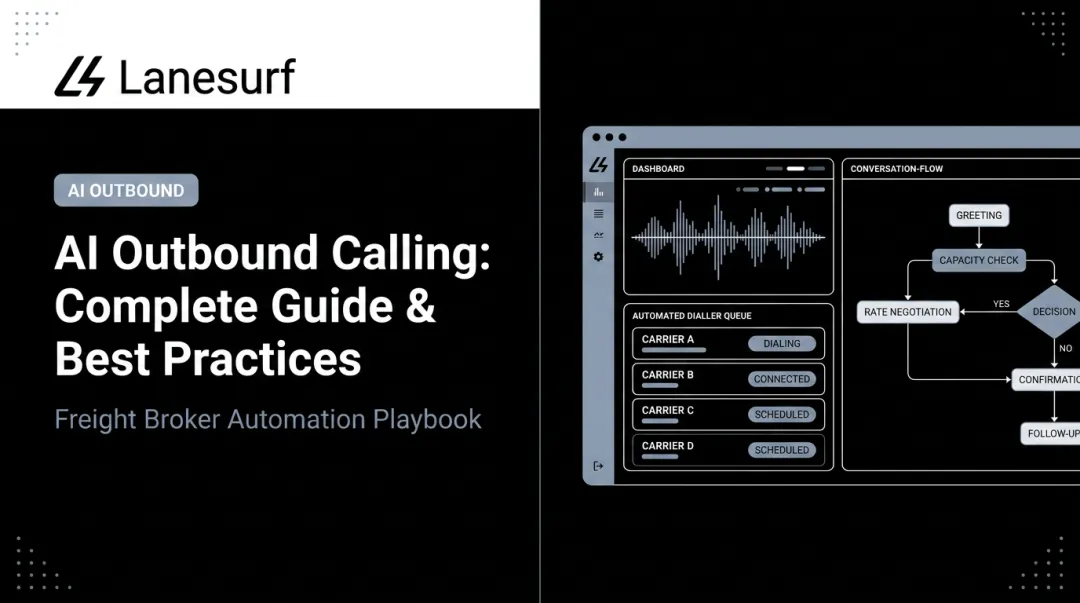
Once connected, the AI agent conducts a real two-way conversation. It asks discovery questions, listens to responses, adapts follow-up questions based on what the prospect says, and handles common objections in real time.
Modern NLP gives the agent real capability: it recognizes intent signals, picks up on hesitation, and steers the conversation toward a defined goal—qualifying the lead, confirming availability, or booking a meeting. Every response is generated in context, not pulled from a fixed script.
Human Handoff Protocols
Not every conversation should stay with the AI. Agents are configured to recognize escalation triggers:
- Complex objections outside the agent's training
- Explicit requests to speak with a person
- High-value enterprise scenarios requiring strategic judgment
- Edge cases like compliance issues or unusual requirements
When a handoff occurs, the human rep receives full conversation context—what was said, what was agreed, what the prospect's concern is. The prospect never has to repeat themselves.
Post-Call Automation
The call ending doesn't mean work stops. Every outcome triggers automated follow-through:
- CRM record updated with call outcome and summary
- Lead scored against qualification criteria
- Meetings booked directly to the rep's calendar
- Follow-up tasks created for non-qualified or no-answer contacts
- Full call log and transcript captured for review and coaching

Reps reclaim roughly 20 minutes of post-call admin per contact—time that compounds fast at volume.
How to Implement AI Outbound Calls in 4 Steps
Step 1: Start With Your Highest-Volume, Most Repeatable Call Types
Don't start with complex enterprise sales. Start where the call structure is predictable and volume is high:
- Lead qualification from inbound forms or purchased lists
- Appointment scheduling and confirmation
- Event or webinar follow-up
- For freight: carrier availability checks, rate confirmation calls, load status updates
Success criteria need to be clear before you hand a call type to an AI agent. If you can't define what a successful call looks like, the agent can't either.
Step 2: Build Your Knowledge Base and Conversation Flows
Train your AI agent before deploying it. That means:
- Documenting common questions and standard answers
- Mapping out qualification criteria and decision logic
- Capturing your best reps' objection-handling language
- Building conversation pathways that cover the realistic range of prospect responses
Once that foundation is in place, configuration can get specific. LaneSurf agents are built against your SOPs, lane-specific pricing thresholds, and rep call recordings—so the agent mirrors your actual process rather than a generic template.
Step 3: Connect Your AI Agent to Your CRM and Tech Stack
A calling tool embedded in your workflow does more than dial numbers. CRM integration means:
- The agent pulls prospect context before each call
- Call outcomes write back automatically after each call
- Lead scores and next steps flow into your existing pipeline without manual steps
Platforms built for specific industries simplify this further. LaneSurf connects directly with major TMS systems, load boards, and carrier compliance portals—so freight brokers get AI calling that slots into their existing workflows from day one, with full TMS integration typically completed in under 10 days.
Step 4: Test, Monitor, and Iterate
Test conversation flows before launch. Then track these KPIs consistently:
| KPI | What It Measures |
|---|---|
| Connect rate | Calls answered / total calls placed |
| Conversation completion rate | Conversations reaching a defined outcome / conversations started |
| Qualification rate | Prospects meeting criteria / completed conversations |
| Cost per qualified lead | Total campaign cost / qualified leads generated |
| Meeting show rate | Meetings held / meetings scheduled |

Set baselines in the first two weeks and use them to identify where conversations break down. Adjust scripts, escalation triggers, and qualification logic based on real data—not assumptions.
Top Use Cases for AI Cold Calling
Lead Qualification at Scale
AI agents work through inbound or outbound prospect lists, ask structured discovery questions, score leads against defined criteria, and route qualified opportunities to human reps. A team that previously processed 50–100 leads per day manually can qualify hundreds per day without adding headcount.
The key is defining qualification criteria tightly before deployment. Consider locking in:
- Minimum deal size or revenue thresholds
- Decision-maker title and authority level
- Geographic or vertical fit requirements
- Timeline to purchase or contract renewal window
The agent is only as good as the criteria it's working against.
Appointment Booking and Follow-Up
Scheduling delays kill pipeline velocity. AI agents can access rep calendars in real time, book meetings during the call itself, and follow up automatically with prospects who went cold — no back-and-forth email threads, no leads falling through because no one sent a second follow-up.
Freight and Logistics: Carrier Outreach Automation
Freight brokers and 3PLs face one of the highest-volume, most repetitive outbound calling scenarios in any industry: carrier availability checks, rate confirmation, check calls, and load status updates.
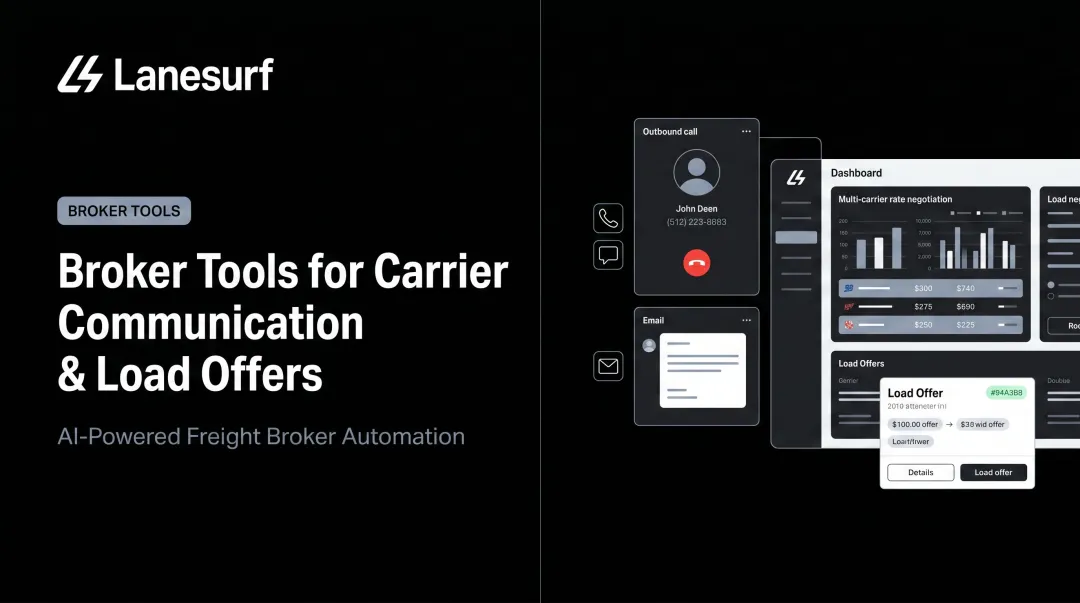
A broker handling 100–500 spot loads per day would traditionally have reps dialing carriers one at a time (roughly 50–150 calls per rep per day). LaneSurf's AI outbound calling contacts multiple carriers simultaneously via voice, email, and text, collecting availability and routing qualified responses back to the dispatch board — without rep involvement until a carrier is ready to book.
The documented outcomes from LaneSurf customers:
- 60–80% of loads AI-sourced—the majority of capacity found without manual rep effort
- 8–10% better buy rates per load—from parallel negotiation across multiple carriers simultaneously
- 4+ hours saved per rep per day—from eliminating the manual source-quote-negotiate-vet cycle

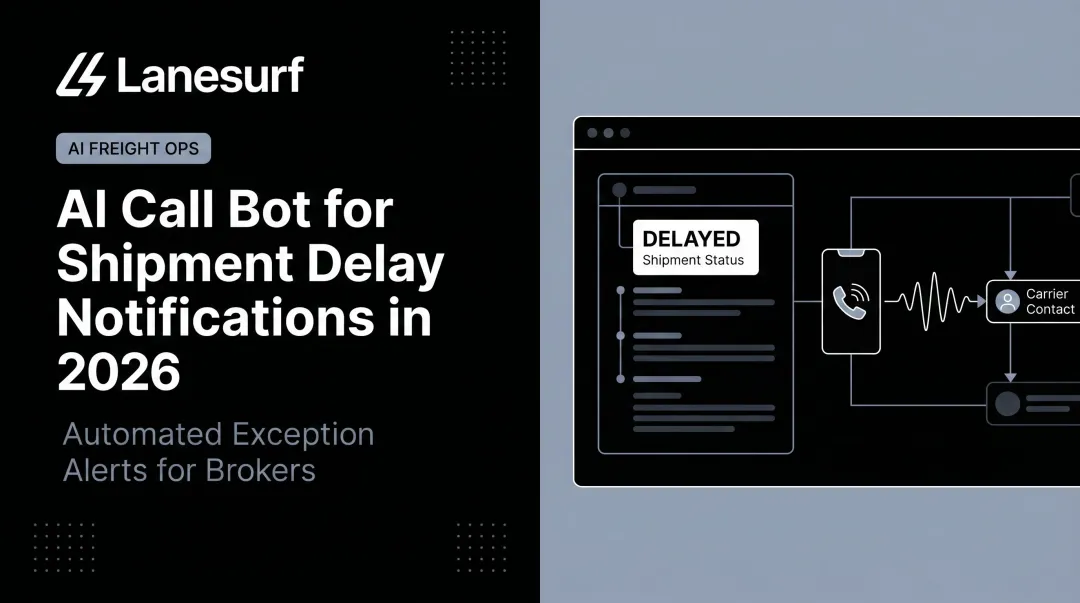
Driver check calls and in-transit tracking work the same way. The AI contacts drivers per your tracking rules, monitors ETAs, detects exceptions proactively, and escalates with full context to your team — before a late load becomes a shipper complaint.
Legal and Compliance Considerations
AI cold calling is legal in the US when done correctly. But the compliance requirements are specific, and getting them wrong creates real liability.
Core Federal Requirements
Following FCC ruling FCC 24-17, AI-generated voices fall within the TCPA's "artificial or prerecorded voice" provisions. That classification carries real obligations:
- Calls to wireless/mobile numbers generally require prior express consent; telemarketing calls to wireless or residential numbers require prior express written consent. B2B status alone doesn't override the wireless number rule.
- Calls to business numbers soliciting that business are mostly exempt from National DNC provisions—but consumer, residential, and mobile records require careful classification.
- The responsible business must be identified at the start of the message, with a callback number provided during or after the call.
- Covered telemarketing messages must include an automated opt-out mechanism.
- Federal rules restrict covered residential/consumer calls to 8:00 AM–9:00 PM local time.
- The FTC's 2024 TSR amendments extended prohibitions on material misrepresentations to B2B telemarketing.
State law caveat: State telemarketing and AI disclosure laws can be stricter than federal rules. Requirements vary and should be reviewed for every state where you're calling.
Practical Compliance Approach
Most modern AI calling platforms include built-in compliance tools—consent management, DNC suppression, disclosure scripts, and opt-out handling. Those tools are only effective when configured correctly from the start—compliance built in at day one is far less costly than retrofitting it after you've scaled. Regardless of what the platform provides, businesses remain ultimately responsible for their own compliance.
Frequently Asked Questions
What is AI cold calling and how does it work?
AI cold calling uses AI-powered voice agents to autonomously conduct outbound conversations—qualifying leads, handling objections, and booking meetings—using natural language processing, without a human on the line. The agent places the call, adapts its responses based on what the prospect says, and logs the outcome automatically.
How is AI cold calling different from robocalling?
Robocalls play a pre-recorded message and can't respond to anything the prospect says. AI cold callers conduct real two-way conversations that adapt in real time based on prospect responses—asking follow-up questions, handling objections, and escalating to a human when needed.
Is AI cold calling legal?
Yes, when configured correctly. It requires TCPA compliance, DNC list suppression, caller identity disclosure, proper consent for wireless and residential numbers, and an opt-out mechanism for telemarketing calls. Regulations vary by state, so review requirements for each jurisdiction where you're operating.
How much does AI cold calling cost compared to hiring human SDRs?
The median US SDR base salary is $60,000 (RepVue, 2024)—before benefits, tools, recruiting, and management overhead. AI calling platforms operate at a fraction of the cost-per-call, scale instantly without ramp time, and run 24/7. At high call volumes, AI cost-per-conversation can run 80–90% lower than fully-loaded human SDR costs.
Can AI cold callers handle objections in real time?
Modern AI agents recognize common objections and respond with relevant counterpoints during the call. Complex or unusual objections typically trigger a warm transfer to a human rep, with full conversation context passed so the prospect doesn't have to repeat themselves.
What industries benefit most from AI outbound calling?
Any business with high-volume, repetitive outbound calls benefits most: SaaS sales, insurance, healthcare scheduling, and freight brokerage. In logistics specifically, carrier availability checks, rate confirmations, and driver check calls can be fully automated—saving each rep several hours of manual dialing daily.