
Introduction
If you run a freight brokerage, you already know the problem: your best reps spend most of their day on the phone chasing carriers, scrolling load boards, and leaving voicemails — rather than closing new business or managing shipper relationships. Every hour spent on manual carrier sourcing is an hour not spent growing the brokerage.
The stakes are real. Missed loads, empty trucks, and stale board listings eat directly into margins. According to the FMCSA's 2023 Pocket Guide, over 30,700 registered property brokers compete for the same carrier capacity — which means the brokerages with faster, smarter sourcing workflows win.
Freight load matching software is how modern brokerages close that gap. This guide breaks down what it is, how it works, which features actually matter, and what to look for when choosing a platform.
Key Takeaways
- Freight load matching software automatically pairs loads with carriers based on route, equipment, and availability — cutting manual sourcing steps
- True digital freight matching (DFM) uses real-time data and AI — not repackaged load board listings
- The best platforms combine AI-driven matching with automated carrier outreach, TMS integration, and compliance vetting
- Carrier network quality and booking speed are the two highest-leverage evaluation factors
- Small and mid-size brokerages gain the most from automation that lets a lean team scale load volume without adding headcount
What Is Freight Load Matching Software?
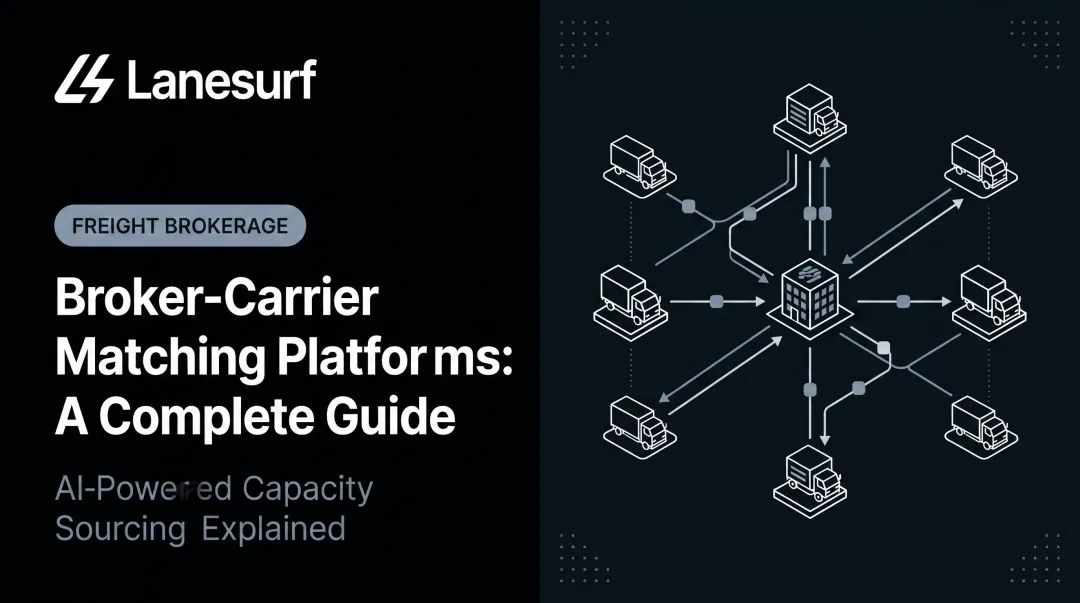
Freight load matching software is a technology platform that automatically pairs loads with carriers based on origin, destination, equipment type, cargo weight, and carrier availability. It replaces the manual process of calls, faxes, and load board searches with an algorithm that handles carrier identification, filtering, and matching automatically.
Load Matching vs. Digital Freight Matching
The terms are often used interchangeably, but there's a meaningful distinction. Traditional load matching is tactical and ad-hoc — a rep searches a board, finds a carrier, and dials. Digital freight matching (DFM) goes further: it uses AI and machine learning to automate matching at scale, in real time, with direct booking or workflow integration.
Truckstop describes DFM as a "tap and go" model where carriers accept loads at posted rates through a digital application — not a human-to-human call chain. Trucker Tools draws the clearest line: public load boards are not real-time and create delays while brokers wait for carrier responses. True DFM uses live data sources and removes trucks that are already booked before they ever appear in results.
Three factors separate genuine DFM from basic load board aggregation:
- Live data — carrier availability updates in real time, not on a polling delay
- Automated matching — the system filters and ranks carriers without manual search
- TMS/API integration — matched loads flow directly into booking workflows
Capacity Sourcing vs. Load Matching
These functions overlap but are distinct:
- Capacity sourcing — identifying carriers with available trucks in the market
- Load matching — filtering those carriers down to the ones that fit a specific load's route, equipment requirements, weight, and timing
Both are part of a brokerage's daily workflow. The best platforms handle both automatically.
Who Uses It
Primarily freight brokerages and 3PLs that need to source carrier capacity quickly across multiple lanes. The core problem it solves is speed: manual capacity sourcing typically consumes 4+ hours of rep time per day — time that could go toward covering more loads and growing margin.
How Freight Load Matching Software Works
The End-to-End Matching Process
When a load is posted with its details — origin, destination, cargo type, weight, equipment, pickup and delivery windows — the platform's algorithm scans available carrier capacity and surfaces matches ranked by fit: route alignment, equipment type, carrier history, and current location.
The basic flow looks like this:
- Load posted with full shipment details
- Algorithm runs — scanning carrier availability against load requirements
- Ranked matches returned — best-fit carriers surfaced first
- Outreach triggered — automated contact initiated across voice, email, or text
- Quote collected and booking confirmed — with compliance checks running in parallel

Real-Time Data vs. Stale Listings
How platforms handle data freshness determines how useful those ranked matches actually are. True DFM pulls live carrier data — active truck posts, real-time search activity, and in some cases ELD/telematics feeds through API partnerships — to identify who actually needs a load in a given lane right now. Platforms that pull from stale load board aggregations surface outdated availability, wasting dispatcher time on carriers already booked or no longer in the lane.
ATRI's 2025 research reported that empty miles averaged 16.7% in 2024 at an average marginal cost of $2.26 per mile. At that cost, surfacing a carrier who's already covered their load isn't a minor inefficiency — it's a direct margin hit.
Ghost Loads
Stale data takes a specific form in load boards: the ghost load. A ghost load is a shipment still posted after it's already been covered — brokers frequently leave these up, creating phantom availability that sends dispatchers chasing carriers for freight that no longer exists. FreightWaves has documented this as a systemic problem, one that compounds deadhead miles and erodes trust in board data. Automated DFM platforms flag and suppress covered loads faster than manual processes, keeping the active board accurate.
Automated Carrier Outreach
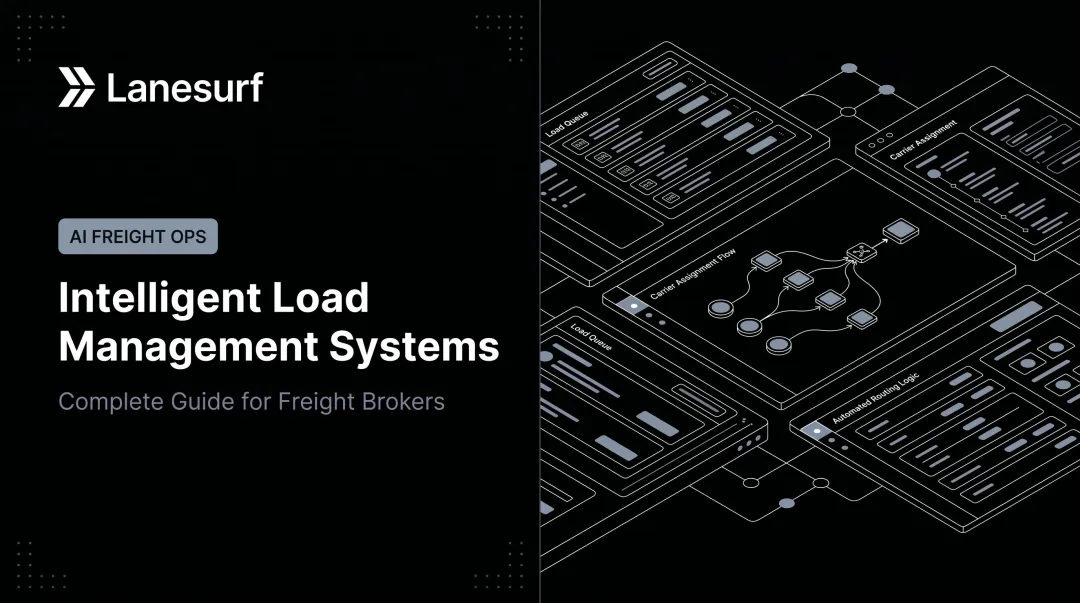
Some platforms go beyond matching to automate carrier contact entirely. LaneSurf's AI Carrier Sales Agent contacts 10–50+ carriers simultaneously via voice, email, and text — running parallel negotiations, collecting quotes, and executing bookings without a rep placing a single call. The full source-to-book cycle compresses to under 10 minutes per load. Manual workflows typically run 30–90 minutes for the same sequence.
Key Features to Look for in Freight Load Matching Software
Real-Time Matching Engine
The difference between real-time and batch processing is load coverage speed. A platform that sends recommendations instantly, load by load as they're posted, gives carriers a first-look advantage over batch systems that notify in bulk. Trucker Tools states that DFM can find capacity in seconds rather than minutes or hours, because it draws from live availability rather than static postings.
When evaluating platforms, ask specifically: how is carrier availability updated, and how are stale postings removed? The answer tells you whether you're looking at genuine DFM or a repackaged load board.
AI and Predictive Analytics
Look for platforms that learn from carrier behavior over time — preferred routes, equipment types, historical booking patterns — to improve match quality continuously. This matters most for loads with tight timelines where surfacing the right carrier in seconds, not minutes, is the difference between covering the load and scrambling.
Analytics dashboards that surface lane pricing trends and carrier performance data in real time also help operations leaders make faster decisions on setting rate thresholds and carrier prioritization.
Automated Carrier Outreach
For freight brokerages, this is the single most differentiating feature. Platforms that automate carrier calls, follow-ups, and status checks allow small teams to handle significantly higher load volumes without adding dispatchers.
LaneSurf's AI Carrier Sales Agent handles the complete outreach workflow: parallel outbound calls, rate negotiation held firm to lane-specific pricing thresholds, compliance vetting, and booking execution. Reported outcomes include 60–80% of loads booked with AI-sourced capacity and 4+ hours saved per rep per day. Human reps engage only when an edge case falls outside the configured SOPs.

TMS Integration
Seamless TMS connectivity is a key indicator of a mature platform. When a carrier booking is confirmed, it should automatically sync back into your TMS, eliminating double data entry and reducing the risk of booking the same load twice.
LaneSurf integrates natively with McLeod, MercuryGate, Tai, Turvo, Revenova, Aljex, and Tailwind, with full integration completing in under 10 days. A pre-integration fast-start (via Excel load export) means the AI can begin working real loads in under 48 hours while integration is configured in parallel. That connectivity also matters for carrier network quality — because the pool the matching engine draws from determines what's actually achievable.
Carrier Network Quality
A matching engine is only as good as the pool it draws from. But gross network size can be misleading — what matters is active, compliant, lane-relevant carrier access.
According to the ATA's 2025 Trucking Trends report, 91.5% of carriers operate 10 or fewer trucks and 99.3% operate fewer than 100. Manual sourcing naturally skews toward larger, more visible carriers — but most available capacity sits with small operators. Platforms with strong small-carrier reach give brokerages access to a significantly wider capacity pool than load board browsing alone.
When evaluating, ask for active carrier counts by lane, equipment type, and recent engagement — not just a headline network total.
Benefits of Freight Load Matching Software for Freight Brokerages
Faster Load Coverage and Higher Throughput
Automated matching and carrier outreach reduce the time from load posting to carrier confirmation substantially. More loads covered per dispatcher means higher revenue without adding headcount — which drives margin expansion for growing brokerages.
The throughput gains come from eliminated friction:
- Fewer manual search steps across load boards and carrier lists
- No duplicate carrier onboarding for lanes you've run before
- Instant booking instead of waiting hours for callbacks
Reduced Empty Miles
By matching carriers already operating in a given lane, DFM software reduces deadhead miles. This lowers carrier costs, improves rate competitiveness, and makes your loads more attractive to preferred carriers. With empty miles averaging 16.7% industry-wide at $2.26 per mile, even modest reductions in deadhead translate to real savings across a carrier's book.
Carriers that deadhead less tend to prioritize your loads on future trips — a compounding advantage in tight markets where capacity availability directly affects your ability to cover freight.
Scalability Without Linear Headcount Growth
As load volume grows, an automation platform scales without requiring proportional headcount increases. For brokerages moving from startup to mid-market, the choice often comes down to hiring another carrier rep or automating the work that rep would do — and the math usually favors automation.
AI-powered tools shift dispatcher time from repetitive outreach to relationship management and business development. A rep spending four fewer hours on manual carrier calls can redirect that time to accounts that actually move the needle on revenue.
Limitations and Tradeoffs to Consider
No tool is a universal fit. Before committing to a platform, understand these tradeoffs:
Carrier Relationship Erosion
A meaningful share of trucking capacity — especially from small, family-owned carriers — is built on personal relationships. Over-reliance on automated platforms can reduce the flexibility, preferential rates, and loyalty that direct relationships provide. Transport Topics has noted that trusted broker-carrier partnerships matter most when capacity is tight.
The best platforms supplement those relationships rather than replace them.
Technology Dependency and Data Quality
Platform outages, integration failures, or poor data hygiene — ghost loads, outdated carrier records — can disrupt operations when there's no manual fallback. Before signing on, verify:
- Uptime guarantees and SLA terms
- Whether data is real-time or aggregated from stale load board feeds
- What the fallback workflow looks like if the system goes down
Cost vs. Volume Fit
Quality load matching tools carry real subscription costs. Truckstop's broker load board starts at $109 per user per month as a baseline reference for entry-level pricing. ROI is clearest for brokerages with consistent load volume — for very low-volume operations, the economics may not work until volume reaches a sustainable baseline.
Map pricing models (per-load vs. flat subscription) against your current and projected volume before committing.
How to Choose the Right Freight Load Matching Software
Evaluate Real-Time Data Quality First
Before assessing features, verify that the platform uses genuine real-time carrier data — not aggregated load board feeds — and that its active carrier network covers your primary lanes. Request a demo or trial focused specifically on your top 3–5 lanes to stress-test carrier availability before signing anything.
Match Automation Depth to Your Biggest Bottleneck
Identify which manual steps cost your team the most time, then choose accordingly:
- For carrier sourcing: prioritize AI-powered outbound call and email automation
- For check-calls and status updates: prioritize driver follow-up automation
- For load posting and board management: prioritize load board integration with automated posting
- For compliance vetting: prioritize portal integration (RMIS, MyCarrierPortal, Highway, Carrier Assure)

Choose a platform whose automation directly addresses your highest-friction workflows, not just the broadest feature checklist.
Confirm TMS Compatibility, Mobile Access, and Support
The platform should integrate with your existing TMS without requiring a full tech overhaul. Mobile access matters for dispatchers working across time zones or remotely. Verify that human support is accessible — not just a help center — for resolving time-sensitive issues during active load coverage.
On the security side, confirm the platform meets these baseline standards:
- Data encryption in transit and at rest
- MFA and role-based access permissions
- Audit logging for every booking action
Frequently Asked Questions
Where can I find the best freight load matching software?
Evaluate platforms based on carrier network quality, real-time data sources, AI matching capability, TMS integration, and automation depth. Test each on your actual primary lanes via a demo or trial. Purpose-built platforms like LaneSurf combine load management with AI-powered carrier call automation in a single workflow — a tighter fit than broader platforms that spread features thin.
What is the difference between freight load matching and a load board?
Load boards are passive marketplaces where carriers and brokers post availability and search manually. Freight load matching software actively and automatically pairs loads to carriers using real-time data, algorithms, and AI — reducing or eliminating the need to manually browse listings and place individual calls.
How does AI improve freight load matching for brokers?
AI learns carrier preferences, routes, and booking patterns over time to surface better matches faster. Advanced platforms also use AI to automate carrier outreach, hold pricing thresholds firm during parallel negotiations, and flag exceptions before they become service failures. This takes the technology well past basic match ranking into active operational support.
What is a ghost load and why does it matter?
A ghost load is a shipment still posted on a load board or platform after it has already been covered. Ghost loads waste dispatcher time and can generate unnecessary deadhead miles when carriers respond to loads that aren't actually available. Automated platforms suppress covered loads in real time, keeping the active matching pool accurate.
Can small freight brokerages benefit from load matching software?
Small and lean brokerages often benefit most because automation allows a small team to cover a much higher load volume without adding staff. The ROI scales with load volume. More loads covered per rep per day is a concrete productivity gain that compounds regardless of brokerage size.
How is digital freight matching different from traditional freight brokerage?
Traditional brokerage relies on human-driven carrier sourcing through calls, emails, and load board browsing. Digital freight matching automates the discovery and outreach process using real-time data and AI. In practice, brokerages get the best results by pairing AI-driven matching with human oversight on complex loads and relationship-sensitive accounts.