
Introduction
Freight brokerage is a speed-first business. FreightWaves captured it plainly: "the broker first to respond generally wins the deal." Manual quote processes — pulling rates from load boards, applying margin, formatting a reply — can consume up to an hour per request. Meanwhile, the shipper has already moved on.
Self-service quoting platforms solve this by automating rate generation entirely. Whether shipper-facing (a portal where customers enter load details and receive instant pricing) or broker-internal (automated tools that eliminate manual rate research), these platforms compress quote turnaround from hours to seconds.
This guide breaks down how self-service quoting platforms work, what separates the best solutions from basic rate calculators, and how AI-powered automation is pushing quoting beyond pricing — into full load execution.
Key Takeaways
- Self-service quoting platforms cut quote turnaround from hours to minutes (often seconds) by automating rate generation
- Manual quoting creates a hard scaling ceiling: more quote volume means proportionally more staff time
- The best platforms pull live market data from DAT and SONAR and apply configurable margin rules automatically
- Integrations with TMS platforms eliminate data re-entry between quoting and load execution
- AI-powered automation extends quoting into carrier outreach, tracking, and exception management — letting brokers scale volume without adding headcount
What Is a Self-Service Quoting Platform in Digital Freight Brokerage?
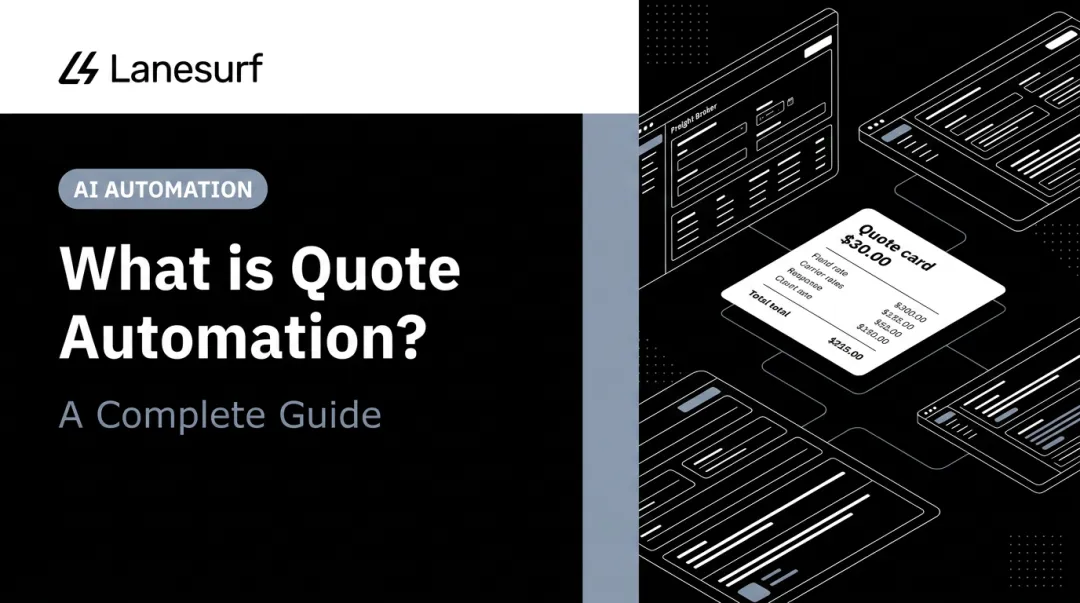
Self-service freight quoting platforms are web or app-based tools that allow users to input shipment parameters — origin, destination, freight type, weight, dimensions — and receive an instant rate quote without manual research or back-and-forth calls.
Two distinct product types fall under this label:
- Shipper-facing portals — External tools where shippers log in, enter load details, and see pricing immediately, similar to booking a flight online
- Broker-internal quoting automation — Tools that allow broker agents or systems to generate accurate quotes automatically, eliminating the manual rate-lookup step entirely
Where Quoting Fits in the Load Lifecycle
Quoting is the first and most time-sensitive touchpoint in a freight transaction. Shippers compare multiple brokers simultaneously, and the rate response speed often determines who gets the load — before any relationship or service differentiation can even factor in.
The market opportunity reflects this urgency. Grand View Research data shows the U.S. digital freight brokerage market generated $2.03 billion in revenue in 2024, with projections reaching $8.42 billion by 2030 at a 27.3% CAGR — driven in large part by automation replacing manual workflows.
What Self-Service Quoting Is Not
These platforms handle high-volume, repeatable quoting workloads. They are not designed to replace broker judgment for freight that requires human analysis, including:
These platforms handle high-volume, repeatable quoting workloads. They are not designed to replace broker judgment for freight that requires human analysis, including:
- Oversized or overweight loads
- Hazmat shipments
- Multi-stop distribution runs
- Any load where lane conditions, accessorials, or carrier constraints require a judgment call
The value is in removing repetitive, manual rate generation — the work that consumes the largest share of broker time on standard lanes.
Why Manual Rate Quoting Is Holding Freight Brokers Back
The manual quoting workflow looks like this: a quote request arrives via email or phone, a rep pulls rate data from multiple sources (load boards, carrier rate sheets, historical lane data), applies margin, and sends back a quote. FreightWaves reported this process can consume up to an hour per request.
At low volumes, this is manageable. At scale, it becomes a ceiling.
The Scaling Problem
A brokerage handling 20 quote requests per day and one handling 200 face fundamentally different operational realities — but both are constrained by the same per-quote time cost. FreightWaves noted that humans are limited to quoting approximately 50 loads per hour, and that manual carrier sales reps typically managed just 8 to 10 loads per day per person.
The result: brokers are forced to choose between:
- Rushing through quotes and risking margin errors
- Taking time to price correctly and losing speed-sensitive shippers
Either way, revenue takes the hit.
The Cost of Slow Response
Shippers evaluating multiple brokers simultaneously award loads to whoever responds first. A broker who returns a quote 45 minutes after a competitor has already responded and booked has done the pricing work for nothing. Every quote that misses the competitive window is a direct revenue loss — the work was done, but the load is gone.
The Accuracy Risk
Manual rate calculations across multiple data sources create compounding error risk. Margin miscalculations — whether underpricing a lane or quoting too high relative to market — erode profitability quietly over time. One transposed rate or stale lane data point can mean booking a load at a loss. The higher the quote volume, the faster those errors compound.
How Self-Service Freight Quoting Platforms Work
The end-to-end workflow of a self-service quoting platform follows four steps:
- User inputs shipment parameters — origin, destination, equipment type, weight, dimensions, pickup date
- Platform queries live market rate data — pulling from integrated benchmarking sources in real time
- System applies pre-configured margin rules — automatically, based on lane, customer type, or volume tier
- Quote is delivered instantly — displayed on a portal, sent via email auto-reply, or pushed directly into the TMS

The Role of Real-Time Rate Data
The freight market moves fast. Cass reported that inferred freight rates rose 5.1% in December 2024 — the first annual increase in two years after a 14% decline in 2023. Pricing based on data from even two or three weeks prior can put a broker materially off-market.
Reliable self-service platforms integrate with benchmarking tools such as:
- DAT — spot market rate data and load board intelligence, accessible via DAT's API integration
- FreightWaves SONAR — billions of logistics data points updated daily, used by 500+ enterprises
- Greenscreens.ai — AI-driven dynamic pricing; McLeod Software selected it in September 2024 to deliver real-time market pricing with automated target rate calculations
Brokers quoting on stale data don't lose deals randomly — they lose them on the lanes where margins matter most.
Auto-Response and 24/7 Availability
Advanced platforms monitor inbound quote request emails and automatically generate and send rate reply emails without human intervention. C.H. Robinson's AI quote system handles 2,000 emailed quote requests per day, delivering truckload quotes in an average of 2 minutes and 13 seconds — compared to the up-to-an-hour manual process it replaced.
Connecting Quoting to Downstream Workflows
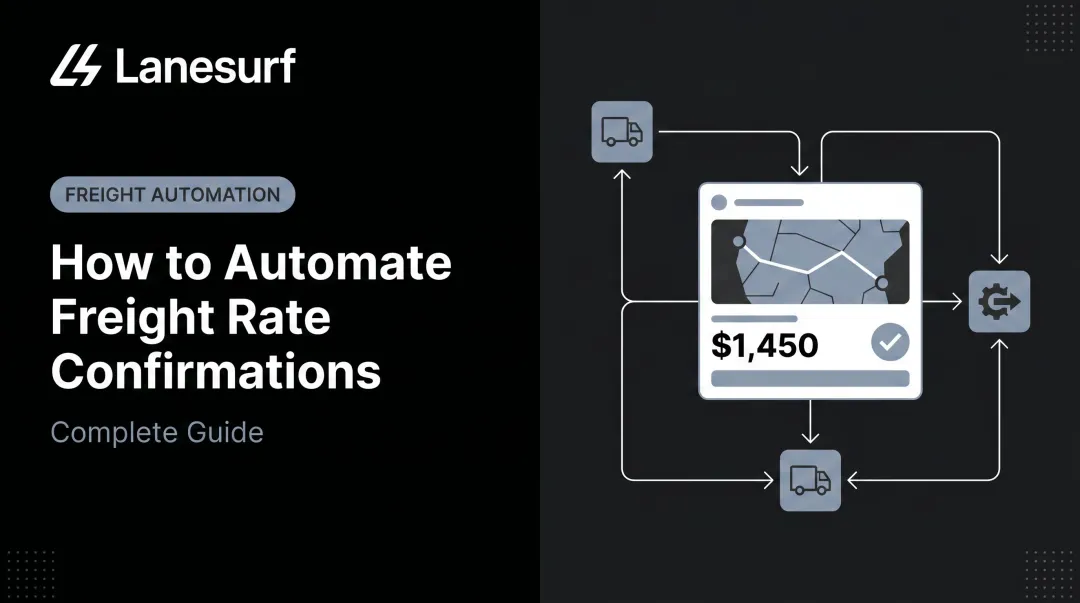
A quote accepted by a shipper needs to flow directly into load building, carrier dispatch, and TMS entry. Platforms that handle quoting in isolation create a new data silo — the rep still has to manually re-enter the booked quote into the TMS. The best solutions close this loop automatically.
That means a single accepted quote should trigger:
- Load record creation in the TMS
- Carrier dispatch outreach on the booked lane
- Rate confirmation and shipper notification
- Margin capture against the original quote
Must-Have Features in a Self-Service Freight Quoting Platform
Live Market Rate Integration
The platform must pull rate data from real-time sources — not static tables updated weekly or monthly. Brokers should expect to see integrations with DAT, FreightWaves SONAR, and Greenscreens.ai as baseline. Stale pricing erodes shipper trust and exposes the brokerage to margin risk on every quote.
Configurable Margin and Pricing Rules
One-size-fits-all margin models don't reflect how brokerages actually operate. A broker needs to apply different margin logic by:
- Lane (high-demand corridors vs. thin-capacity lanes)
- Customer type (contract shipper vs. spot market)
- Freight mode (FTL vs. LTL vs. refrigerated)
- Volume tier (high-volume accounts vs. occasional shippers)
Rigid platforms that apply a flat margin percentage across all quotes undermine profitability systematically. Brokers running mixed freight profiles can't afford a platform that doesn't bend to their pricing structure.
TMS and Workflow Integration
A quoting tool that doesn't connect to the broker's TMS creates a two-system problem. The best platforms integrate directly — so when a shipper accepts a quote, that data flows automatically into load creation, carrier assignment, and shipment tracking. Before committing, brokers should confirm the platform integrates natively with their specific TMS: McLeod, MercuryGate, Tai, Turvo, Aljex, and similar systems each have different integration depths.
Multi-Mode Support
Most self-service platforms start with truckload (FTL), but brokerages increasingly need a single quoting interface across modes. IANA reported that North American intermodal volume grew 8.5% in 2024, reaching approximately 18.1 million moves. Brokers handling FTL, LTL, and intermodal from separate systems face compounding operational friction. Verify mode coverage before selecting a platform.
Analytics and Quote Performance Tracking
Quoting platforms should surface performance data, not just generate quotes. Brokers need visibility into:
- Quote volume by period and lane
- Win rates by lane and customer
- Margin performance across quote types
- Response time averages
Win rate and margin data by lane tell brokers exactly where to tighten pricing, where to pull back, and which corridors are worth pursuing for contract volume.
How AI-Powered Automation Takes Self-Service Quoting Further
Self-service quoting handles the sell-side rate generation problem. But winning a quote is only the beginning — someone still has to source the carrier, negotiate the buy rate, vet compliance, and book the load. That's where AI-powered automation extends the value of quoting platforms.
From Quoting to Full Load Execution
The evolution looks like this:
| Stage | Tool | What It Handles |
|---|---|---|
| Rate generation | Self-service quoting platform | Instant sell-side quote to shipper |
| Carrier sourcing | AI carrier outreach | Parallel contact with 10–50+ carriers simultaneously |
| Rate negotiation | AI negotiation engine | Buy-rate discipline across all carriers at once |
| Compliance | Automated vetting | MC checks, COI verification, safety scores |
| Booking | AI booking automation | End-to-end cycle in under 10 minutes |
| Tracking | AI check-call automation | Driver contact, ETA monitoring, exception escalation |

LaneSurf is an AI freight automation platform built specifically for freight brokers and 3PLs. Its AI Carrier Sales Agent autonomously calls, emails, and texts carriers to source capacity, negotiate buy rates, and execute bookings — without a broker rep making manual calls. It's not a quoting tool; it's the carrier operations layer that runs downstream from quoting and handles the execution work that still requires significant manual effort at most brokerages.
The Business Impact
The case for combining self-service quoting with AI carrier automation comes down to scale math. Carrier sales reps using manual processes typically handle 8 to 10 loads per day per person, according to FreightWaves reporting. AI-enabled workflows push that to 20 loads per day, with some automated brokerages reaching 50 loads per day per person.
LaneSurf customer data reflects similar outcomes: 60–80% of loads booked with AI-sourced capacity, 8–10% better buy rates per load through parallel multi-carrier negotiation, and 4+ hours of manual effort saved per rep per day.
That gap separates a brokerage that hires proportionally as it grows from one that scales revenue without scaling headcount. Combined with automated sell-side quoting, AI carrier operations let brokers respond faster, hold margin, and move more freight per rep — all at once.
Frequently Asked Questions
What is a self-service freight quoting platform?
A self-service freight quoting platform is an online tool or portal that allows shippers or broker agents to input shipment details — origin, destination, freight type, weight — and receive an instant rate quote. It eliminates manual rate research and the back-and-forth of phone or email quoting.
How does automated freight quoting work?
The platform queries live market rate data from integrated sources (DAT, SONAR, Greenscreens.ai), applies the broker's pre-configured margin rules, and returns a quote in real time — via a shipper portal, email auto-reply, or TMS entry. No human rate research is required.
What are the benefits of self-service quoting for freight brokers?
Core benefits include:
- Faster response times that improve quote win rates
- Reduced manual workload per rep
- Ability to handle significantly higher quote volumes
- Improved pricing accuracy from live market data, not stale rate tables
How does self-service quoting integrate with a TMS?
The best platforms integrate directly with the broker's TMS so that accepted quotes flow automatically into load creation and carrier assignment — eliminating duplicate data entry. Verify native integration with your specific TMS before purchasing.
Is self-service quoting suitable for all freight types?
Most platforms are strongest for standard truckload (FTL) shipments. Leading tools increasingly support LTL and intermodal, but coverage varies. Brokers managing multiple modes should verify mode support explicitly before selecting a platform.
What is the difference between self-service quoting and traditional freight rate quoting?
Traditional quoting can take 30 minutes to an hour per quote, relies on individual broker availability, and works off static rate tables. Self-service quoting is automated, available 24/7, and applies live market data with configurable margin rules in seconds.